
Experienced, creative and practical Lawyers and Solicitors in Essex and Suffolk
Established for more than 250 years, Ellisons Solicitors is a top 200 UK law firm and one of the region’s oldest, most established and fastest growing firms. We have a proven track record of providing clients with first class service and advice, enabling them to make the right decisions.
We advise businesses and individuals across the UK and beyond – aided by our membership of the Alliott Global Alliance (a worldwide alliance of professional firms). You can find our offices across Essex and Suffolk in Colchester, Chelmsford, Ipswich, Bury St Edmunds, Frinton-on-Sea and London.

TRUSTED ADVICE
We focus on you – not just the process. Our partner-led, multidisciplinary team offer a truly committed and lasting partnership with our clients.

INTERNATIONAL SERVICES
As part of a large global network of professional firms, we can help clients unlock the growth potential offered by new markets across the world.


HIGH QUALITY LEGAL ADVICE FROM EXPERIENCED LAWYERS
Ellisons Solicitors has been recognised as a leading law firm in the Legal 500. Our Lexcel accreditation highlights our continued achievement in providing the standard of best practice in our industry, and shows our commitment to ensuring client care is at the centre of our service delivery. We are also thrilled to have been presented with the Education in Business Award at the Suffolk Business Awards, for going above and beyond when looking to develop and grow our diverse team and achieve the Great Place to Work Certification™.

Locations
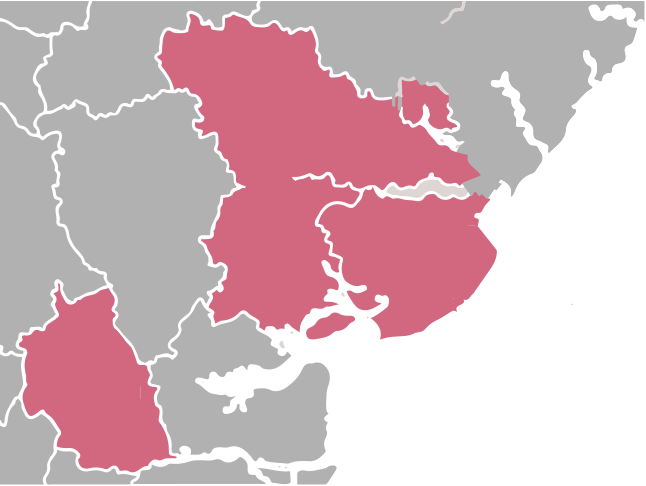
We have offices located across Essex and Suffolk. Find your nearest one and plan your visit using the link below or the map to left.
We also offer a central London office for optional client meetings.
1 Marylebone High Street, London, W1U 4LZ
Our expertise
We offer a comprehensive range of legal services to both individuals and businesses, including advice on: Employment, Residential Conveyancing, Commercial Property, Corporate and Commercial, Construction, Dispute Resolution, Rural Affairs, Personal Injury, Family, Wills, Trusts and Probate, Medical Negligence and Immigration. Our experts can also provide Independent Financial Advice as well as International Services.








LATEST NEWS FROM ELLISONS

Insights
18th April 2024
Proposed amendments to the Renters Reform Bill
Background The Renters Reform Bill (“the Bill”) will see the commitment of the Governments 2019 manifesto, to create a fairer

Insights
17th April 2024
Partner Visas
Generally speaking, when the Home Office change policy or introduce a new policy, it generally means that they are tightening

11th April 2024
Health and Welfare LPAs
Lasting powers of attorney (“LPAs”) came into force on 1 October 2007 under the Mental Capacity Act 2005. There are

Our Experts
We support our clients, beyond the law. We focus on applying our expertise, connections and commercial judgement to steer clients through any challenges they face.

Get in Touch
Our friendly team of experts are here to help. Send us an email or give us a call and we will get back to you as soon as possible.